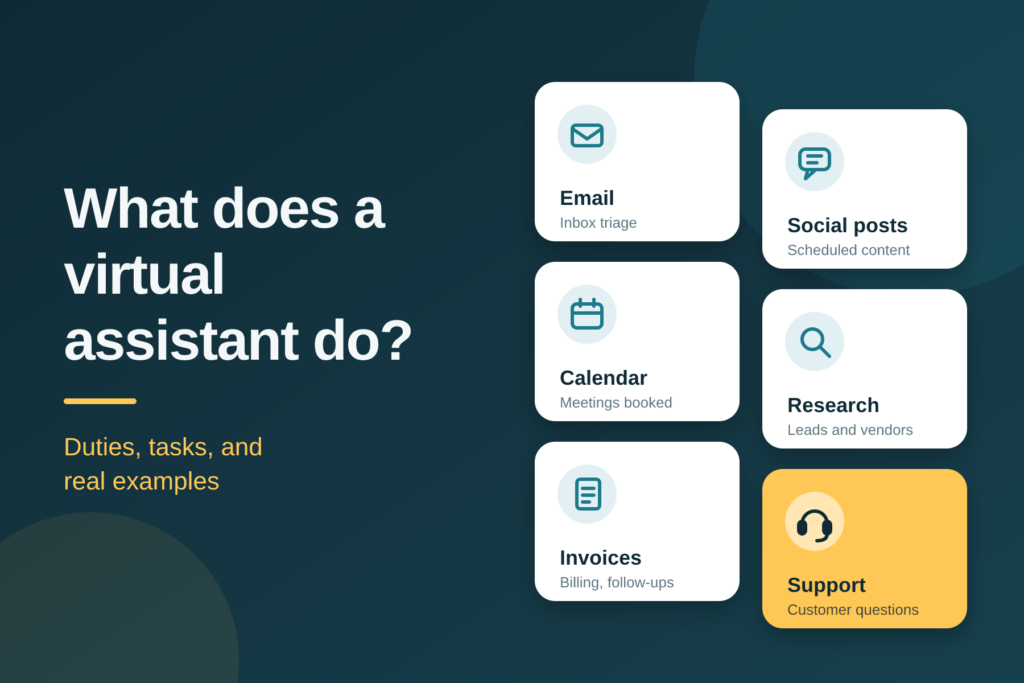
A virtual assistant (VA) is a remote professional who handles administrative, technical, or creative tasks for a business or individual. Typical VA duties include managing email and calendars, entering data, answering customer messages, updating CRMs, scheduling social posts, and supporting bookkeeping.
VAs work independently from their own location. They communicate through email, chat, video calls, and shared project tools.
What a virtual assistant does: core duties
Administrative support
- Manages and sorts email, flags priority messages
- Schedules meetings and handles calendar conflicts
- Books travel and appointments
- Prepares documents, spreadsheets, and reports
- Enters and cleans data
Customer service
- Replies to customer emails and chat messages
- Updates order status and handles basic requests
- Sends appointment reminders and follow-ups
- Escalates complex issues to you
Sales and CRM support
- Researches leads and builds contact lists
- Updates CRM records
- Sends follow-up emails from your templates
- Books discovery calls
Marketing support
- Schedules social media posts
- Formats newsletters
- Does keyword and competitor research
- Posts blog content to a CMS
Bookkeeping and finance support
- Sends invoices and tracks payments
- Categorizes expenses
- Reconciles accounts under supervision
- Prepares reports for your accountant
Technical and e-commerce support
- Uploads and updates product listings
- Processes orders and returns
- Maintains website content
- Sets up tools and automations
A sample week with a virtual assistant
| Day | Typical tasks |
| Monday | Inbox triage, weekly calendar review, follow-ups on open leads |
| Tuesday | CRM updates, customer replies, invoice sending |
| Wednesday | Research task, social post scheduling |
| Thursday | Meeting prep, data entry, expense tracking |
| Friday | Weekly status report, next-week planning |
Skills and tools a virtual assistant uses
Skills: written communication, time management, attention to detail, discretion with confidential information, and the ability to follow documented processes.
Common tools: Google Workspace, Microsoft 365, Slack, Zoom, Trello, Asana, ClickUp, QuickBooks, HubSpot, and password managers.
What a virtual assistant usually does not do
- Make major business decisions for you
- Sign contracts or approve payments without your authorization
- Provide legal, tax, or medical advice unless qualified and contracted for it
- Work on-site (the role is remote)
Setting these boundaries early prevents confusion later.
Virtual assistant vs. related roles
| Role | How it differs |
| Executive assistant | Works closely with senior leaders and handles strategic calendars, often in a deeper, more embedded role |
| Receptionist | Handles front-desk and call-answering duties, often on-site |
| Freelancer | Delivers a defined project, such as a logo or a website |
| AI assistant | Automates narrow tasks but lacks human judgment, context, and accountability |
Many businesses combine a human VA with AI tools. The VA handles judgment, relationships, and quality checks, and automation handles repeatable steps.
Who hires virtual assistants?
Solo entrepreneurs, small businesses, real estate agents, e-commerce sellers, consultants, agencies, and busy executives. If you’re weighing whether it fits your business, read our guide to virtual assistant services for small business.
How to decide what to hand off
Ask three questions about each task. Is it repeatable? Can it be written down as steps? Does it require your personal judgment? If the answers are yes, yes, no, it’s a strong delegation candidate.
Ready to hand off your first tasks? Explore Virtual Eases virtual assistant services or contact our team.
FAQ
What does a virtual assistant do on a daily basis?
A VA typically manages email, schedules appointments, updates databases or CRMs, responds to customer inquiries, and completes assigned research or admin tasks. The exact tasks depend on your business.
What tasks can I give a virtual assistant?
Almost any repeatable, remote-friendly task: scheduling, data entry, customer support, social media scheduling, invoicing, lead research, and e-commerce order handling.
Can a virtual assistant do bookkeeping?
Many can, including invoicing, expense tracking, and reconciliation under supervision. Complex tax or compliance work should go to a qualified bookkeeper or CPA.
Does a virtual assistant need special training?
No formal license is required. Strong VAs build skills in specific tools, such as Google Workspace, CRMs, or accounting software, and in written communication and organization.
What’s the difference between a virtual assistant and an executive assistant?
An executive assistant usually supports senior leaders in a more embedded, strategic role. A VA is a broader term for remote support, from basic admin to specialized services.