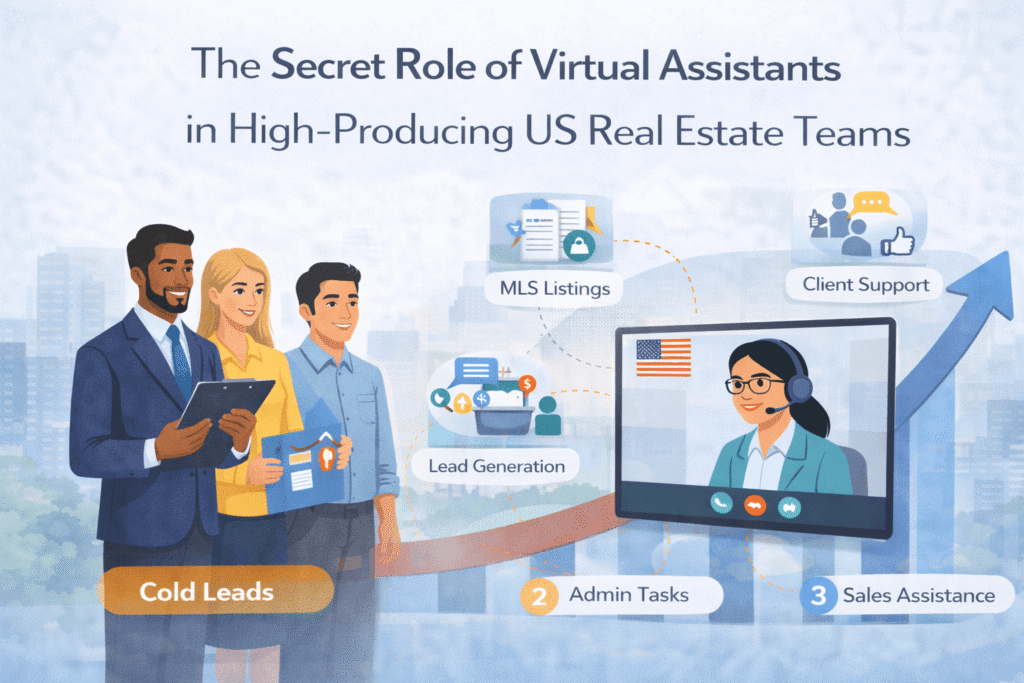
High-producing real estate teams in the United States rarely succeed by chance. Behind consistent closings, fast response times, and scalable growth lies a carefully structured support system. One of the most important, yet often invisible, contributors to this success is the Real Estate Virtual Assistant (VA).
While top agents focus on negotiations, showings, and relationship building, virtual assistants quietly manage operations, marketing, lead flow, and systems. This blog uncovers the real role VAs play in high-performing real estate teams and how they help agents scale without chaos.
Why Top US Real Estate Teams Depend on Virtual Assistants
High-producing teams operate very differently from solo agents. They handle:
- Hundreds or thousands of leads per month
- Multiple listing platforms and CRMs
- Ongoing marketing campaigns
- Tight response-time expectations
- Continuous follow-ups and reporting
Trying to manage this without support leads to missed opportunities and burnout. Virtual assistants allow teams to separate revenue-generating work from operational work, ensuring nothing slips through the cracks.
The Real Estate VA: More Than Just Admin Support
A common misconception is that virtual assistants only handle basic administrative tasks. In reality, experienced real estate VAs function as operations specialists, marketing coordinators, lead managers, and transaction support professionals.
In high-producing teams, VAs are deeply integrated into daily workflows and decision-making systems.
They are responsible for:
- Creating structure
- Maintaining consistency
- Supporting scale
- Protecting agent time
How Virtual Assistants Support High-Performing Real Estate Teams
Below are the core areas where virtual assistants play a critical role.
1. Lead Management and CRM Operations
High-performing teams generate leads from multiple sources such as websites, paid ads, listing portals, referrals, and open houses. Without a structured system, these leads quickly become unmanageable.
What VAs Handle:
- Importing leads into CRM systems
- Cleaning, tagging, and segmenting contacts
- Assigning leads to agents automatically
- Updating lead status and timelines
- Tracking communication history
Why It Matters:
Accurate CRM management ensures every lead is nurtured properly. High-producing teams rely on data-driven follow-ups, and VAs maintain the integrity of that data.
2. Speed-to-Lead and Follow-Up Systems
Top real estate teams understand that response time directly impacts conversion rates. Studies consistently show that responding within the first few minutes dramatically increases the chance of engagement.
VA Responsibilities:
- Immediate SMS or email responses
- Automated follow-up sequences
- Scheduled check-ins over weeks or months
- Logging responses and updating CRM notes
Impact on Team Performance:
Virtual assistants ensure leads are contacted quickly and consistently — something agents cannot always do while in meetings or showings.
3. Transaction Coordination and Deal Flow Management
As deal volume increases, transaction complexity grows. Missing a document, deadline, or signature can delay or derail a closing.
VA Transaction Support Includes:
- Managing transaction checklists
- Coordinating with lenders, escrow, and title companies
- Uploading documents to transaction platforms
- Tracking deadlines and contingencies
- Sending reminders to all parties
High-producing teams use VAs to maintain smooth, predictable closings while agents focus on negotiations and client relationships.
4. Listing Management and MLS Support
Listings are the foundation of most successful real estate teams. Each listing requires detailed coordination across platforms.
VA Listing Tasks:
- Creating MLS listings
- Uploading photos, descriptions, and disclosures
- Managing listing updates and price changes
- Syndicating listings across platforms
- Monitoring listing performance
By delegating listing operations to a VA, teams ensure accuracy, speed, and consistency across all channels.
5. Marketing Execution and Campaign Management
Marketing is ongoing, not optional. High-producing teams run continuous campaigns, but agents rarely have time to execute them personally.
VAs Support Marketing By:
- Scheduling social media posts
- Managing email newsletters
- Updating website content
- Uploading blogs and property pages
- Coordinating ad creatives and landing pages
This allows teams to maintain a strong online presence without distracting agents from sales activities.
6. Appointment Setting and Calendar Control
Time management is one of the biggest challenges for top agents. Poor scheduling leads to missed opportunities and inefficiencies.
VA Scheduling Responsibilities:
- Booking appointments with leads
- Coordinating showings and consultations
- Sending confirmations and reminders
- Managing calendar conflicts
- Reducing no-show rates
Well-managed calendars help teams operate at a high level without constant interruptions.
7. Lead Qualification and Pre-Screening
Not every lead is ready to buy or sell immediately. High-producing teams rely on VAs to pre-qualify prospects before agents invest time.
Qualification Tasks:
- Asking budget, timeline, and location questions
- Identifying motivation levels
- Tagging leads as hot, warm, or cold
- Escalating high-intent prospects to agents
This ensures agents speak primarily with serious prospects.
8. Data Reporting and Performance Tracking
Successful teams make decisions based on numbers, not guesses.
VAs Generate Reports On:
- Lead sources and conversion rates
- Follow-up performance
- Appointment-to-close ratios
- Marketing campaign results
- Agent productivity metrics
With consistent reporting, team leaders can optimize strategies and allocate resources effectively.
The Hidden Advantage: Consistency and Scalability
One of the biggest advantages of virtual assistants is consistency.
Agents may have fluctuating availability, but VAs:
- Follow systems daily
- Maintain communication standards
- Execute processes the same way every time
This consistency allows real estate teams to scale without operational breakdowns.
Why High-Producing Teams Prefer Virtual Assistants Over In-House Staff
Many top teams choose VAs instead of hiring locally due to:
- Lower overhead costs
- Access to specialized real estate talent
- Flexible working hours
- Scalability without office expansion
- Reduced hiring and training time
Virtual assistants provide enterprise-level support without enterprise-level expenses.
Common Mistakes Teams Make Without Virtual Assistants
Teams that delay hiring support often face:
- Slow response times
- Poor follow-up consistency
- CRM data chaos
- Agent burnout
- Missed deals due to admin overload
Virtual assistants solve these issues before they impact revenue.
How VirtualEases Supports High-Producing Real Estate Teams
At VirtualEases, our real estate virtual assistants are trained specifically for the US market. They understand:
- US real estate workflows
- CRM platforms used by top teams
- Lead management best practices
- Professional communication standards
- Transaction and listing processes
Our VAs integrate seamlessly into your existing systems and act as a true extension of your team.
When Is the Right Time to Hire a Real Estate VA?
You should consider a VA if:
- You are missing follow-ups
- Leads are not being contacted quickly
- You spend more time on admin than sales
- Your team is growing faster than your systems
- You want to scale without burning out
High-producing teams don’t wait until they are overwhelmed — they build support early.
The Bottom Line
Behind every high-producing US real estate team is a strong operational backbone. Virtual assistants are no longer optional; they are a strategic advantage.
They enable teams to:
- Respond faster
- Close more deals
- Maintain quality at scale
- Protect agent focus
- Grow sustainably
The most successful teams understand one truth: growth does not come from doing more – it comes from delegating better.