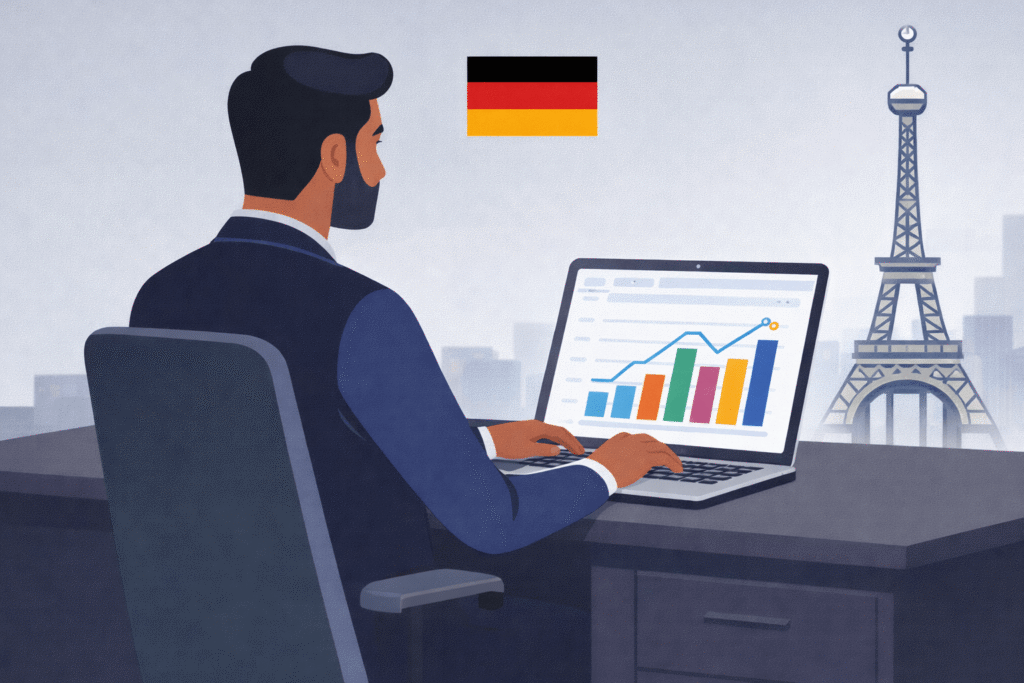
The global outsourcing industry has transformed how businesses operate, and Germany is now one of the strongest European markets adopting remote staffing and virtual assistant services. At the same time, India continues to dominate the global outsourcing ecosystem with its massive skilled workforce, cost efficiency, and digital maturity.
Today, thousands of German companies—from Mittelstand businesses and startups to multinational enterprises—are increasingly outsourcing administrative, technical, financial, and customer support functions to Indian virtual assistants. This guide explains everything about virtual assistant services in Germany for Indians, including market demand, services offered, benefits, pricing, legal compliance, tools, challenges, and future scope.
What Are Virtual Assistant Services?
A virtual assistant (VA) is a remote professional who provides business support using cloud-based tools, digital platforms, and secure internet systems. Virtual assistants perform a wide variety of tasks such as:
- Administrative management
- Customer support
- Accounting and bookkeeping
- IT and technical assistance
- Digital marketing
- Data research and analytics
- E-commerce operations
They are commonly hired on:
- Hourly contracts
- Monthly retainers
- Full-time remote staffing models
- Project-based assignments
Virtual assistants allow companies to scale faster, lower operational costs, and maintain productivity without physical office expansion.
Why Germany Is a High-Demand Market for Virtual Assistants
Germany is Europe’s largest economy and one of the most industrially and technologically advanced nations in the world. However, German businesses currently face:
- Severe talent shortages
- High employment and social security costs
- Complex labor regulations
- Rising digital transformation requirements
- Growing demand for multilingual customer support
- Pressure to remain competitive in global markets
To solve these challenges, German firms increasingly rely on offshore virtual assistants, with India emerging as the most trusted outsourcing partner.
Why German Companies Prefer Indian Virtual Assistants
1. Massive Cost Savings
Hiring full-time employees in Germany involves:
- High wages
- Health insurance
- Pension contributions
- Office infrastructure costs
- Strict labor laws
Indian virtual assistants reduce staffing costs by 60%–75%.
2. Large Skilled Workforce
India produces millions of trained professionals every year in:
- IT & software
- Business administration
- Accounting & finance
- Digital marketing
- Data science
- Customer support
3. Strong English & International Communication
Indian VAs are well-versed in:
- Business English
- Global client interaction
- Corporate documentation
- Customer service standards
4. Time-Zone Advantage
India and Germany have overlapping business hours, making:
- Daily meetings easy
- Faster turnaround possible
- Near real-time collaboration achievable
5. High Digital & Automation Expertise
Indian professionals are highly experienced with:
- CRM software
- Accounting platforms
- Cloud systems
- AI tools
- Robotic process automation
Types of Virtual Assistant Services Provided by Indians to German Businesses
1. Administrative Virtual Assistants
- Email and calendar management
- Document creation & formatting
- CRM updates
- Data entry
- Meeting coordination
2. Customer Support Virtual Assistants
- Live chat & email support
- Order management
- Complaint resolution
- Customer onboarding
- Technical helpdesk
3. Digital Marketing Virtual Assistants
- Social media handling
- SEO support
- Ad campaign tracking
- Content scheduling
- Lead capture automation
4. E-Commerce Virtual Assistants
- Product listings
- Inventory tracking
- Vendor coordination
- Customer order processing
- Returns & refunds handling
5. Accounting & Bookkeeping Virtual Assistants
- Invoice processing
- Bank reconciliation
- Payroll preparation
- Expense tracking
- Financial reporting
6. IT & Technical Virtual Assistants
- Website maintenance
- Hosting support
- CMS management
- SaaS tool administration
- Cybersecurity monitoring
7. Research & Data Virtual Assistants
- Market research
- Competitor analysis
- Data mining
- Report creation
- Business intelligence dashboards
Benefits of Hiring Indian Virtual Assistants for German Businesses
✅ Reduced Labor Costs
✅ Scalable Remote Workforce
✅ Access to Global Talent
✅ Fast Hiring Without Legal Complexity
✅ Round-the-Clock Productivity
✅ No Office Infrastructure Costs
✅ High Work Discipline & Process Adherence
✅ Strong Technical Capabilities
How Indians Can Work as Virtual Assistants for German Companies
Indian professionals typically work with German companies through:
- Outsourcing & VA Agencies
- Freelance Marketplaces
- Dedicated Remote Staffing Firms
- Direct Long-Term Service Contracts
- White-Label Outsourcing Models
They work as independent contractors, not as on-roll German employees.
Legal, Compliance & Data Protection Considerations
Germany is governed by strict data protection laws under GDPR. Therefore, when working with Indian VAs, companies require:
- Non-Disclosure Agreements (NDAs)
- GDPR-compliant data handling
- Encrypted system access
- Secure VPN connectivity
- Role-based access permissions
- Regular security audits
Indian VAs remain legally employed in India and do not require German work visas since all services are delivered remotely.
Industries in Germany That Hire Indian Virtual Assistants the Most
- IT & Software Development
- Manufacturing & Engineering
- E-Commerce & Retail
- Accounting & Financial Services
- Healthcare Administration
- Logistics & Supply Chain
- Digital Marketing Agencies
- Renewable Energy Companies
- Automotive Industry Support Services
Cost of Virtual Assistant Services in Germany for Indians
Average pricing range:
- Entry-Level VA: EUR 6 – EUR 10 per hour
- Mid-Level VA: EUR 10 – EUR 18 per hour
- Specialized VA: EUR 18 – EUR 30+ per hour
Monthly full-time VA cost generally falls between
EUR 800 to EUR 2,200, depending on expertise and role.
This is dramatically lower than hiring equivalent in-house staff in Germany.
Common Tools Used by German Clients & Indian Virtual Assistants
- Communication: Microsoft Teams, Zoom, Slack
- Project Management: ClickUp, Trello, Asana, Jira
- CRM: Salesforce, HubSpot, Zoho
- Accounting: DATEV, QuickBooks, Xero
- Cloud Storage: Google Drive, OneDrive, Dropbox
- E-Commerce: Shopify, WooCommerce, Amazon Seller Central
Challenges in Germany–India Virtual Assistant Collaboration
- Cultural communication styles
- Initial training efforts
- Data protection compliance
- Language barriers for German-only roles
- Process documentation setup
- Performance monitoring
These challenges are effectively managed through:
- SOP documentation
- Daily reporting structures
- Weekly review calls
- Secure IT frameworks
- Trial contract periods
Future Scope of Virtual Assistant Services in Germany for Indians
The future of Germany–India virtual staffing is extremely strong due to:
- Rapid digital transformation across German industries
- Growing shortage of skilled local professionals
- High cost of physical office operations
- Expansion of German SaaS and startup ecosystems
- Increased reliance on remote work post-pandemic
Indian virtual assistants are no longer limited to backend support—they are now becoming strategic operational partners for German enterprises.
How German Companies Select the Right Indian Virtual Assistant
Before signing long-term contracts, German companies typically evaluate:
- Educational background
- Technical certifications
- Industry-specific experience
- Communication standards
- Security awareness
- Trial performance results
- Work availability and reliability
A 30-day pilot engagement is widely used before full deployment.
Conclusion
Virtual assistant services in Germany for Indians represent one of the fastest-growing global outsourcing partnerships today. German businesses gain access to cost-efficient, technically strong, and highly disciplined professionals, while Indian virtual assistants benefit from stable international income, long-term contracts, and global exposure.
As Germany continues to digitize its economy and India expands its global outsourcing leadership, this cross-border collaboration will become an essential pillar of modern business operations.
Frequently Asked Questions (FAQs)
1. Can Indian citizens legally provide virtual assistant services to German companies?
Yes, they can legally offer services remotely without any German work visa.
2. Do German companies need to register in India to hire Indian VAs?
No, they simply sign remote service contracts.
3. How are Indian virtual assistants paid by German clients?
Through international bank transfers, Wise, PayPal, or global payroll platforms.
4. Do Indian VAs work according to German business hours?
Yes, most adjust their shifts to match German time zones.
5. Is GDPR compliance mandatory for Indian VAs working with German companies?
Yes, strict GDPR protocols must be followed.
6. Which roles are most outsourced from Germany to India?
IT support, accounting, customer support, digital marketing, and data research.
7. Can Indian VAs handle German-language work?
Yes, many multilingual VAs are available, but German language proficiency may cost more.
8. What is the minimum contract duration?
Most agencies offer monthly, quarterly, and annual contracts.
9. Are Indian virtual assistants reliable for long-term projects?
Yes, many work with the same German company for several years.
10. Is outsourcing to India better than hiring locally in Germany?
For most support and technical roles, yes—due to cost efficiency, speed of hiring, and workforce scalability.