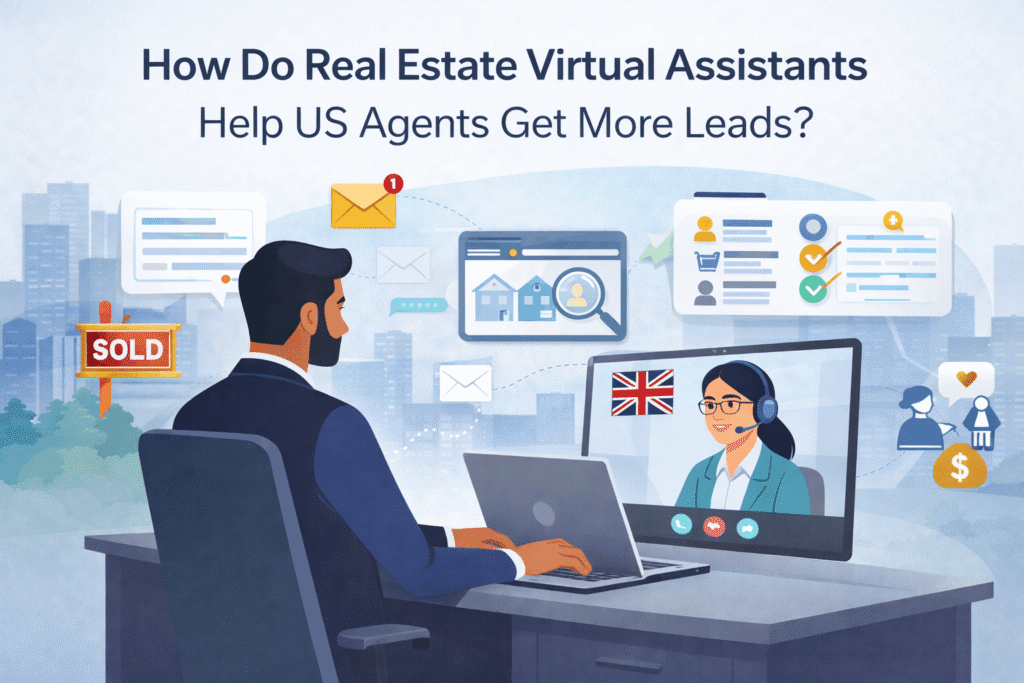
The US real estate market is more competitive than ever. Buyers expect instant responses, sellers want maximum exposure, and online platforms have made lead generation both an opportunity and a challenge. While technology has opened new doors, it has also increased the workload for real estate agents. Managing listings, responding to inquiries, nurturing leads, running ads, following up, and maintaining CRMs can quickly become overwhelming.
This is where real estate virtual assistants (VAs) play a game-changing role.
A real estate virtual assistant is not just a support resource – they are a lead generation accelerator. By handling time-consuming marketing, communication, and data-related tasks, virtual assistants help US real estate agents focus on what truly matters: closing deals and building relationships.
In this in-depth guide, we’ll explore how real estate virtual assistants help US agents get more leads, the exact tasks they perform, the tools they use, and why more top-performing agents are relying on virtual assistants to scale their businesses.
What Is a Real Estate Virtual Assistant?
A real estate virtual assistant is a trained remote professional who supports real estate agents, brokers, and teams by handling administrative, marketing, and lead-generation tasks from a remote location.
Unlike in-house assistants, virtual assistants:
- Work remotely
- Are hired on hourly or monthly plans
- Do not require office space or employee benefits
- Are highly specialized in real estate processes
Many US agents hire virtual assistants from countries like India, the Philippines, or Latin America, where skilled professionals are available at a fraction of the cost of local hires.
Why Lead Generation Is the Biggest Challenge for US Real Estate Agents
Before understanding how VAs help, it’s important to understand the problem.
US real estate agents struggle with:
- Inconsistent lead flow
- Delayed follow-ups
- Poor CRM management
- Missed online inquiries
- Inefficient marketing execution
- Limited time for prospecting
Studies consistently show that most leads are lost due to slow response times or lack of follow-up, not because of poor quality. Virtual assistants directly solve this issue.
How Real Estate Virtual Assistants Help US Agents Generate More Leads
1. Faster Lead Response = Higher Conversion Rates
Speed matters in real estate.
When a potential buyer or seller fills out a form on Zillow, Realtor.com, Facebook, or a website, they often contact multiple agents. The agent who responds first usually wins the lead.
A real estate virtual assistant:
- Monitors inboxes, CRMs, and lead platforms
- Responds to inquiries instantly
- Sends pre-approved messages or texts
- Schedules calls or appointments in real time
This immediate response dramatically increases lead conversion rates.
- CRM Management and Lead Organization
Many agents collect hundreds or thousands of leads—but fail to organize them properly.
Virtual assistants:
- Clean and update CRMs
- Segment leads by buyer, seller, investor, or renter
- Tag leads by urgency and location
- Track communication history
- Set reminders for follow-ups
With a clean CRM, agents can run targeted campaigns and never miss an opportunity.
- Lead Follow-Up That Never Slips Through the Cracks
Consistent follow-up is the backbone of real estate lead generation.
Virtual assistants handle:
- Follow-up emails
- SMS reminders
- Cold lead reactivation
- Long-term nurture campaigns
- Appointment confirmations
Most deals happen after 5–8 follow-ups, but many agents stop after one or two. Virtual assistants ensure persistent yet professional communication, keeping the agent top-of-mind.
- Social Media Lead Generation
Social media is one of the most powerful lead sources for real estate agents—but it requires daily consistency.
Real estate virtual assistants:
- Create and schedule posts
- Promote listings
- Share market updates
- Respond to comments and DMs
- Engage with local audiences
- Manage Facebook groups and pages
This consistent presence helps agents attract organic leads and build local authority.
- Facebook & Google Ads Support
Paid ads generate high-quality leads—but managing campaigns takes time and expertise.
Virtual assistants can:
- Upload ad creatives
- Manage ad comments
- Route leads into CRM systems
- Monitor campaign performance
- A/B test landing pages
- Coordinate with ad specialists
By handling backend ad tasks, VAs allow agents to scale paid lead generation efficiently.
- Listing Promotion Across Multiple Platforms
More exposure means more leads.
Virtual assistants distribute listings across:
- Zillow
- Realtor.com
- MLS platforms
- Facebook Marketplace
- Craigslist
- Property portals
- Email newsletters
They ensure listings are optimized with:
- Accurate descriptions
- SEO-friendly titles
- High-quality images
- Correct pricing and details
This maximizes visibility and inbound inquiries.
- Email Marketing & Newsletter Campaigns
Email marketing remains one of the highest ROI lead-generation channels.
Virtual assistants:
- Build email lists
- Segment subscribers
- Create newsletters
- Send market updates
- Promote listings
- Share buyer and seller guides
Consistent email communication keeps leads warm and ready to convert when the time is right.
- Cold Calling and Lead Qualification
Many US agents use cold leads from expired listings, FSBOs, or data providers.
Trained virtual assistants:
- Call leads using scripts
- Qualify prospects
- Gather requirements
- Update CRM notes
- Book appointments for agents
This saves agents hours of prospecting while delivering pre-qualified leads.
- Market Research & Buyer/Seller Insights
Understanding the local market improves lead conversations.
Virtual assistants provide:
- Comparative market analysis (CMA)
- Neighborhood research
- Pricing trends
- Competitor analysis
- Buyer demand insights
Armed with data, agents can offer more value during lead interactions.
- Website Lead Capture & Chat Support
Many real estate websites lose leads due to unattended chats.
Virtual assistants:
- Monitor live chat tools
- Engage visitors instantly
- Capture contact details
- Answer basic questions
- Schedule consultations
This turns passive website traffic into active leads.
Tools Real Estate Virtual Assistants Commonly Use
Real estate VAs are trained on popular industry tools, including:
- CRMs: Follow Up Boss, kvCORE, LionDesk, Zoho, HubSpot
- Lead Platforms: Zillow, Realtor.com, Redfin
- Email Tools: Mailchimp, ActiveCampaign
- Social Media: Facebook, Instagram, LinkedIn
- Project Management: Trello, ClickUp, Asana
- Communication: Zoom, Slack, Google Workspace
Cost Advantage: Why Virtual Assistants Deliver Higher ROI
Hiring an in-house assistant in the US can cost:
- $3,500–$5,000 per month
- Plus benefits, payroll taxes, and office space
A real estate virtual assistant typically costs:
- $6–$15 per hour
- $800–$1,800 per month for full-time support
This allows agents to reinvest savings into:
- Paid ads
- Better tools
- Market expansion
- Team growth
How Virtual Assistants Help Agents Scale Without Burnout
Burnout is common in real estate.
Virtual assistants help by:
- Reducing administrative overload
- Eliminating repetitive tasks
- Creating predictable workflows
- Freeing agents to focus on clients
- Supporting business growth without stress
Top-producing agents don’t work harder—they delegate smarter.
Common Mistakes Agents Make Without Virtual Assistants
- Responding late to leads
- Losing track of follow-ups
- Inconsistent marketing
- Poor CRM hygiene
- Overworking and burning out
A virtual assistant fixes these gaps systematically.
How to Hire the Right Real Estate Virtual Assistant
When hiring, agents should look for:
- Real estate-specific experience
- CRM knowledge
- Strong English communication
- Marketing familiarity
- Data security awareness
- Willingness to work US time zones
A trial period of 2–4 weeks is highly recommended.
Future of Real Estate Lead Generation with Virtual Assistants
As AI, automation, and remote work continue to evolve, virtual assistants will become even more critical.
Future trends include:
- AI-assisted lead qualification
- Automated follow-up workflows
- Predictive lead scoring
- Hyper-personalized marketing
- 24/7 virtual real estate teams
Agents who adopt virtual assistants early gain a long-term competitive advantage.
Conclusion
So, how do real estate virtual assistants help US agents get more leads?
They respond faster, follow up better, market consistently, manage data efficiently, and free agents to focus on closing deals.
In a market where speed, consistency, and personalization matter more than ever, real estate virtual assistants are no longer optional—they are essential growth partners.
FAQs
1. Can a virtual assistant really help generate real estate leads?
Yes. Virtual assistants handle lead capture, follow-ups, CRM management, and marketing – directly increasing lead volume and conversions.
2. Are real estate virtual assistants affordable for solo agents?
Absolutely. Many solo agents start with part-time VAs and scale as results grow.
3. Do virtual assistants work US business hours?
Yes, most real estate VAs align their schedules with US time zones.
4. Can virtual assistants handle Zillow and Realtor.com leads?
Yes, they are trained to manage leads from all major real estate platforms.
5. Will I lose control over my business by hiring a VA?
No. Virtual assistants work under your instructions, systems, and approvals.
6. How quickly can I see results after hiring a VA?
Most agents see improvements in response time and lead engagement within the first month.
7. Are virtual assistants trained in real estate CRMs?
Yes, most have experience with popular real estate CRMs.
8. Can a VA help with both buyers and sellers?
Yes, they can manage both buyer and seller pipelines effectively.
9. Is my client data safe with a virtual assistant?
With NDAs, restricted access, and secure systems, data safety is well-managed.
10. Is a virtual assistant better than hiring an in-house assistant?
For most agents, yes—due to lower costs, flexibility, and faster scalability.